Newsletter Subscribe
Enter your email address below and subscribe to our newsletter
Enter your email address below and subscribe to our newsletter

 ByJohn A
Contrast therapy means alternating short rounds of heat and cold, typically a barrel sauna at 160 to 175 degrees Fahrenheit followed by a plunge in 50 to 59 degree water, repeated two to three times. The heat side has decades of population research behind it; the cold side has a thinner and more mixed evidence base, especially for anyone trying to build muscle. Beginners get the most out of it by starting with shorter, milder rounds on both ends rather than chasing the coldest water and the hottest sauna on day one.
A barrel sauna session raises core and skin temperature, increases heart rate into a range similar to light to moderate cardio, and dilates blood vessels near the skin. Regular sauna bathing several times a week has been linked in long-term cohort studies to lower rates of fatal cardiovascular events and all-cause mortality, and short-term studies show measurable changes in blood pressure and vascular markers after a single session. These are population associations built from people who already had a sauna habit, not guarantees for any one individual, but the direction of the evidence across multiple independent studies is consistent.
Cold water immersion triggers a sharp vasoconstriction response, a spike in stress hormones, and for many people a genuine mood lift right after getting out. Where the evidence gets murkier is recovery and performance. A 2025 systematic review and meta-analysis of cold water immersion research found effects on wellbeing and recovery markers that were real but modest and inconsistent across studies, not the uniformly strong recovery boost that early cold plunge marketing often implies. Some earlier trials on cold water immersion after resistance training found it can blunt the muscle-building response, which matters if your barrel and plunge sessions happen on the same day as a lifting workout.
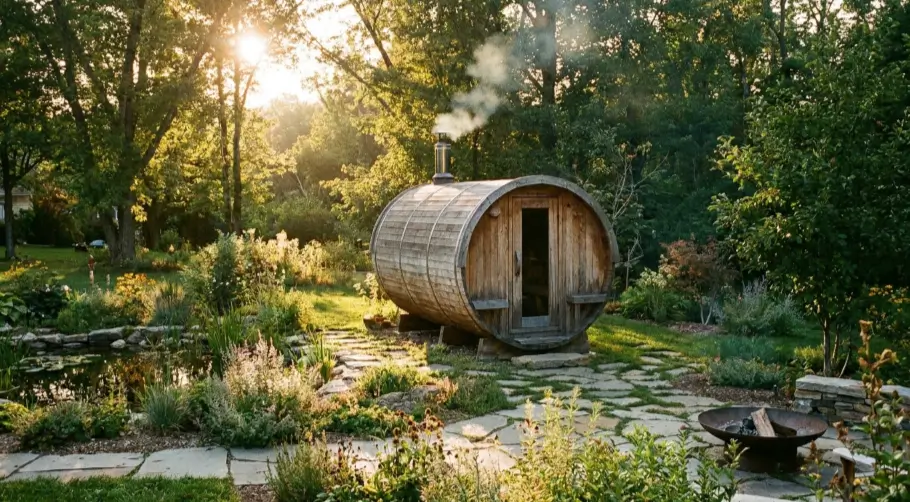
A barrel sauna is a heat chamber: curved cedar or thermally modified staves, a wood or electric heater, and a bench layout built around sitting or reclining for ten to twenty minutes at a time. A cold plunge is closer to a small insulated tub or a chiller-fed tank, sized in gallons rather than cubic feet, built around short, controlled dips of one to five minutes. They solve different jobs. The barrel is a slow, sustained heat exposure; the plunge is a brief, sharp cold shock. Contrast therapy pairs them specifically because the heat-cold-heat cycling produces vascular effects that neither one alone reproduces.
A common beginner pattern is eight to twelve minutes in the barrel at a moderate temperature, one to three minutes in the plunge, then a short rest before repeating for two to three total rounds, finishing on either temperature depending on whether you want to wind down or feel alert afterward. There’s no single research-backed number of rounds that clearly outperforms the rest, so this is more about sustainability than hitting an exact protocol. People who push straight to the longest, coldest, hottest version in week one are the ones most likely to quit within a month.
Close proximity matters more than most beginners expect. A barrel and plunge set ten or fifteen feet apart on separate surfaces sounds fine on paper, but walking that distance barefoot between a 170 degree barrel and 55 degree water gets old fast, especially in winter. Most people end up happiest with the two units within a few steps of each other on a shared gravel, paver, or composite deck pad that drains well, since dripping water off a wet plunge exit is the most common complaint people report after setup. Retailers such as SweatDecks sell barrel saunas sized for exactly this kind of paired setup, which is worth checking before you commit to a layout built around a single unit.
Anyone with a heart condition, uncontrolled blood pressure, or who is pregnant should talk with a doctor before starting either the heat or the cold side, and cold water immersion in particular carries a real risk of an involuntary gasp reflex for people unfamiliar with sudden cold exposure. Alcohol and either extreme temperature is a bad combination for the same reason it always is: impaired judgment plus a demanding cardiovascular load. None of this means contrast therapy is unusually risky for a healthy adult who starts gradually, but it’s not a routine to jump into at full intensity on day one.
A reasonable marker is comfort with a full sauna session at a moderate temperature without feeling rushed to leave early, since that suggests your body is already handling one end of the temperature swing well before adding the other. There’s no fitness test or age cutoff that determines readiness beyond ordinary health screening for the conditions listed below. Some people prefer to build heat tolerance for several weeks before introducing cold at all, while others start both at once with very mild versions of each, a short session at a moderate temperature paired with a brief cool rinse rather than a full ice bath. Either approach is reasonable as long as the starting intensity on both ends is mild rather than maximal.
Start with one round: a normal sauna session at a temperature you’re already used to, followed by a short, mild cold exposure, even a cool shower if you don’t have a plunge yet. Add a second round once the first feels routine, and only push toward colder water or more rounds after a few weeks of consistency. The research supports regular, moderate sauna use fairly strongly; it supports aggressive cold protocols much less firmly, which is exactly why the cold side is the one worth easing into.
How hot should a barrel sauna be for contrast therapy?
Most beginners start around 160 to 175 degrees Fahrenheit for eight to twelve minutes, warm enough to raise heart rate and skin temperature without pushing a first session too far.
How cold does the plunge need to be?
Water in the 50 to 59 degree range for one to three minutes is a common starting point. Colder is not automatically better, and shorter, consistent exposures tend to be more sustainable.
Does cold plunging cancel out the benefits of the sauna?
Not the cardiovascular associations, but cold exposure right after strength training may blunt some muscle-building adaptations, so lifters often plunge on non-lifting days instead.
How many rounds of hot and cold should a beginner do?
Two to three rounds is a reasonable start, ending on whichever temperature feels better, since no single round count clearly outperforms the rest in the research.
How far apart should the sauna and plunge be placed?
Close enough to walk between barefoot in under 15 seconds, on a surface that drains well, since dripping water between the two is the main practical complaint people report.
By Meredith Cole